
Learn Harness: An Agent Harness Learning List, from Basics to Production
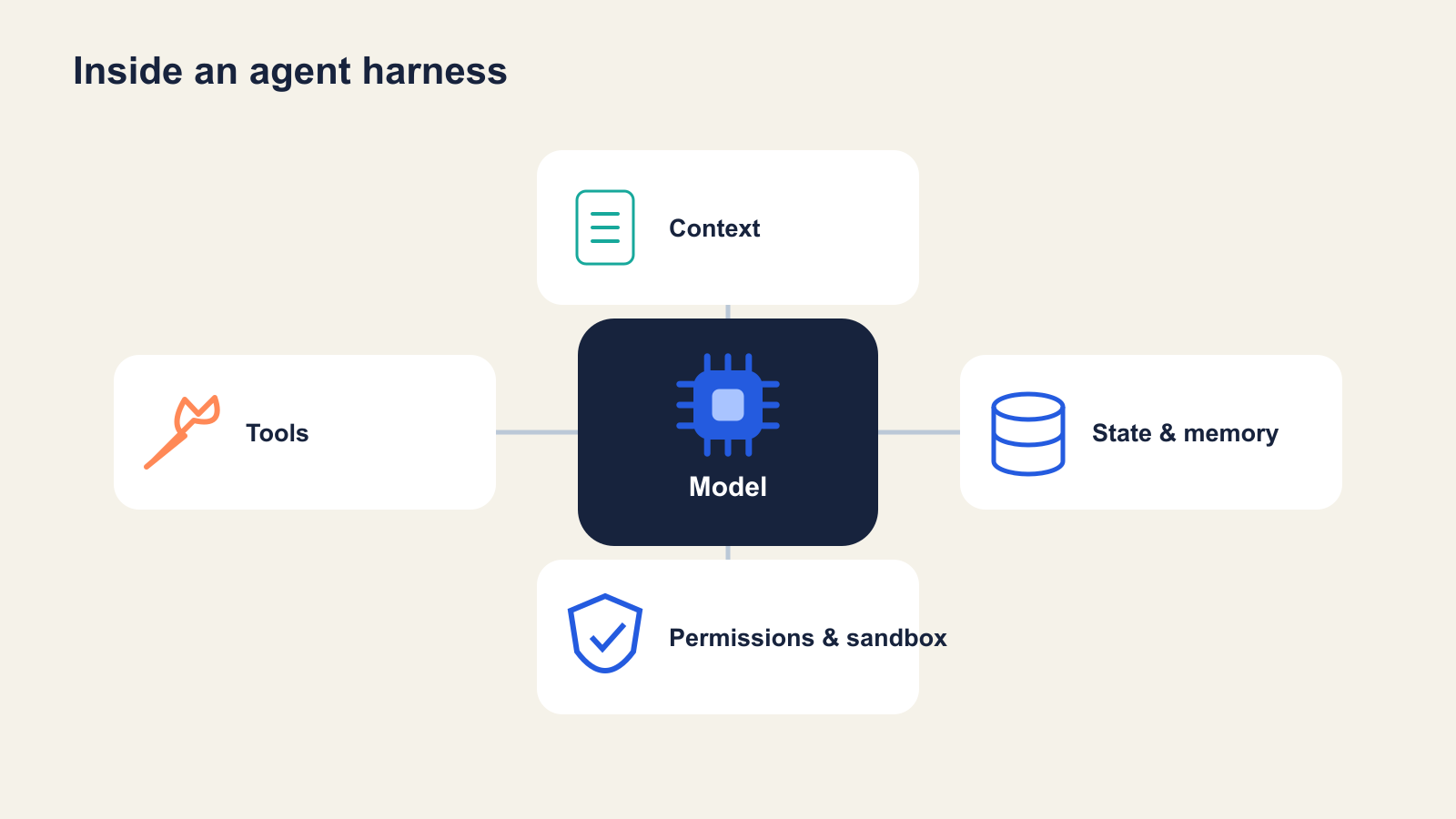
An agent harness is the runtime around a model: it executes tools, manages context and state, and enforces permissions. Work through this list from a minimal loop to production concerns, or jump to the topic you need; times are estimates for reading or a first exercise, with video length shown separately.
Beginner: agent harness concepts and a minimal loop
- Anthropic — Building effective agents: Learn the difference between workflows and agents, starting with simple patterns. (25 min)
- LangChain — The Anatomy of an Agent Harness: Map tools, context, infrastructure and orchestration to their roles. (25 min)
- OpenAI — Function calling: Follow tool definitions, execution, result handoff and the next model response. (60–90 min)
- mini-swe-agent: Trace a compact action loop and its message history in source code. (60–90 min)
Intermediate: agent harness tools, context and boundaries
- Anthropic — Writing effective tools: Improve tool names, argument descriptions and useful return values. (45 min)
- Anthropic — Effective context engineering: Explore retrieval, compaction and structured notes. (45 min)
- Deep Agents — Memory: Separate conversation state from persistent memory and inspect storage options. (45 min)
- Claude Code — Permissions: Understand allow, ask and deny rules and what they match. (30 min)
- Claude Code — Sandboxing: Check filesystem and network isolation, including its coverage limits. (45 min)
- Anthropic — Effective harnesses for long-running agents: Learn initialization, incremental progress and session handoffs. (45 min)
- LangChain Academy — Introduction to Deep Agents: Study tools, context and delegation in a structured course; the curriculum is public, lessons require enrollment. (Allow 4–6 hours)
- LangChain — Building Deep Agents and Deploying in Production: Use the video introduction to orient yourself to memory, durable execution and human intervention. (15:39; page verified, full video not reviewed)
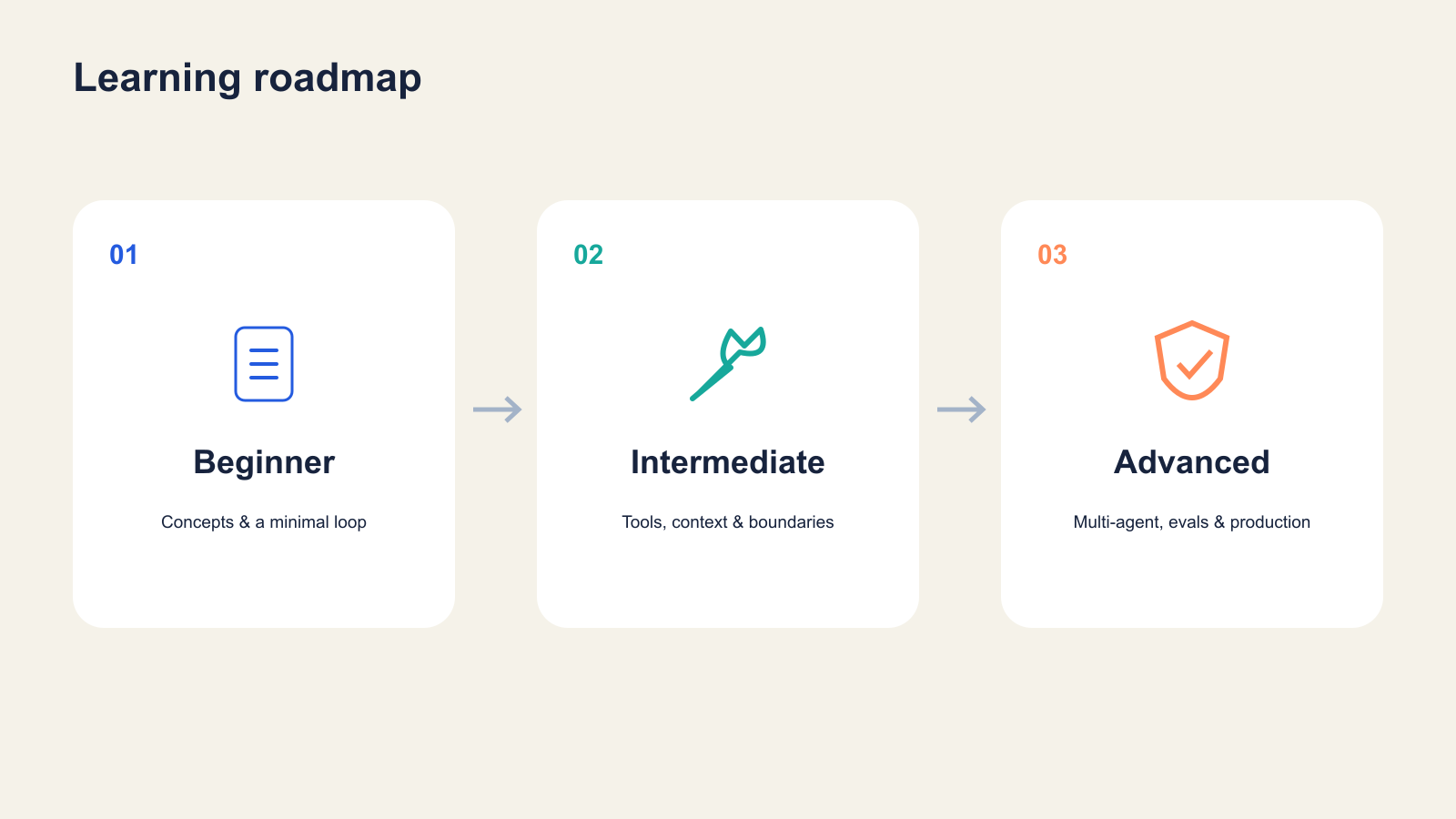
Advanced: agent harness evaluation and production
- Anthropic — Multi-agent research system: Study coordinator-worker delegation, parallel research and coordination. (60 min)
- Anthropic — Demystifying evals for AI agents: Design tasks, traces, graders and repeated trials. (60 min)
- LangGraph — Persistence: Distinguish thread checkpoints, cross-thread stores and restart recovery. (60 min)
- LangGraph — Fault tolerance: Learn retry boundaries, timeouts, idempotency and external side effects. (60 min)
- OpenAI — Codex App Server: Explore the integration protocol for threads, turns, events and approvals. (90 min)
- Codex source repository: Follow one execution, session or approval path alongside the documentation. (2–3 hours)
The similarly named LearnHarness is an app for learning other subjects; this list is about building that runtime.
Latest from the blog
New research, comparisons, and workflow tips from the Vibe Coding Tools team.
Understand DeepInfer through a kitchen analogy, explore possible user benefits, and find verified community learning and deployment projects.
Understand deepseek-v4-pro-qwen3.5-9b-uncensored-heretic: Qwen weights, claimed DeepSeek teacher data, ARA layers 9–23, and evaluation limits.
Follow a real DeepSeek Superagent task through five screenshots: submit a request, inspect routing, watch a Worker create a file, and learn when its session is reused.