
Finding Keyword Opportunities: An Audio-to-SRT Walkthrough
Finding Keyword Opportunities: An Audio-to-SRT Walkthrough
1. Start with a product, then follow its search traffic
This workflow uses Similarweb, Google Search, and Google Trends:
Discover a tool → inspect non-brand organic keywords
→ check volume, clicks, and KD → look at NEW and growth
→ open the tool → check trends and search competitors
→ inspect competing pages' traffic → calculate a title-match ratio
→ decide whether the opportunity deserves a product
One way to discover products with a commercial offering is to analyze checkout.stripe.com in Similarweb. Open Referral Traffic → Incoming Traffic, choose a month, and inspect the websites sending visitors to checkout. Open a promising source to understand its product before investigating its keywords.
The direction matters: tool website → Stripe checkout. For the checkout domain, inspect incoming referrals. If you already have a tool in mind, its outgoing traffic can show the reverse view. See Similarweb's Incoming Traffic documentation and Outgoing Traffic documentation.
Access to the full report depends on your plan. A checkout visit is a commercial signal, not proof of a completed payment.
For the worked example, we will use TurboScribe, an audio/video transcription and subtitle tool.
2. Read demand first, growth second
Enter turboscribe.ai in Similarweb's website keyword report and select Organic Traffic → Non-Branded Keywords. The screenshots below use August 2026 data.
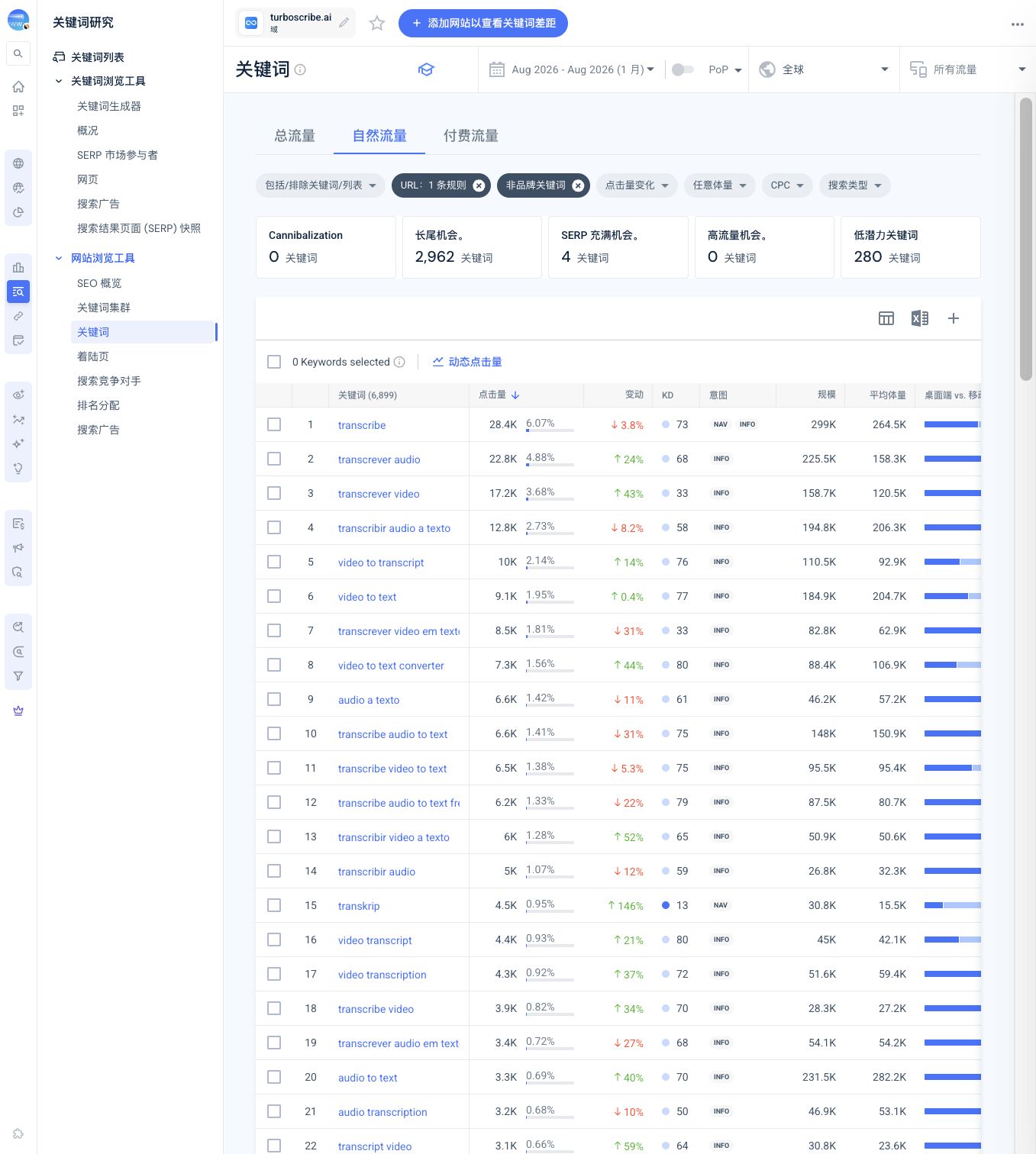
Start with three columns: search volume, clicks, and KD. Volume describes searches for the keyword across the market; clicks here are the visits the keyword sends to the selected website; KD estimates ranking difficulty.
As a starting point, look for more than 1,000 monthly searches, at least 50 clicks to the site, and KD below 30. These are working preferences, not pass/fail rules.
Then inspect NEW and growth. A promising keyword that is gaining clicks deserves attention. But NEW means it is newly recorded for this website, not necessarily a newly invented need.
Where the three candidates come from
To group the variants, open the keyword include/exclude filter. Choose Include and Phrase match, enter audio to srt, and select the matching suggestion.
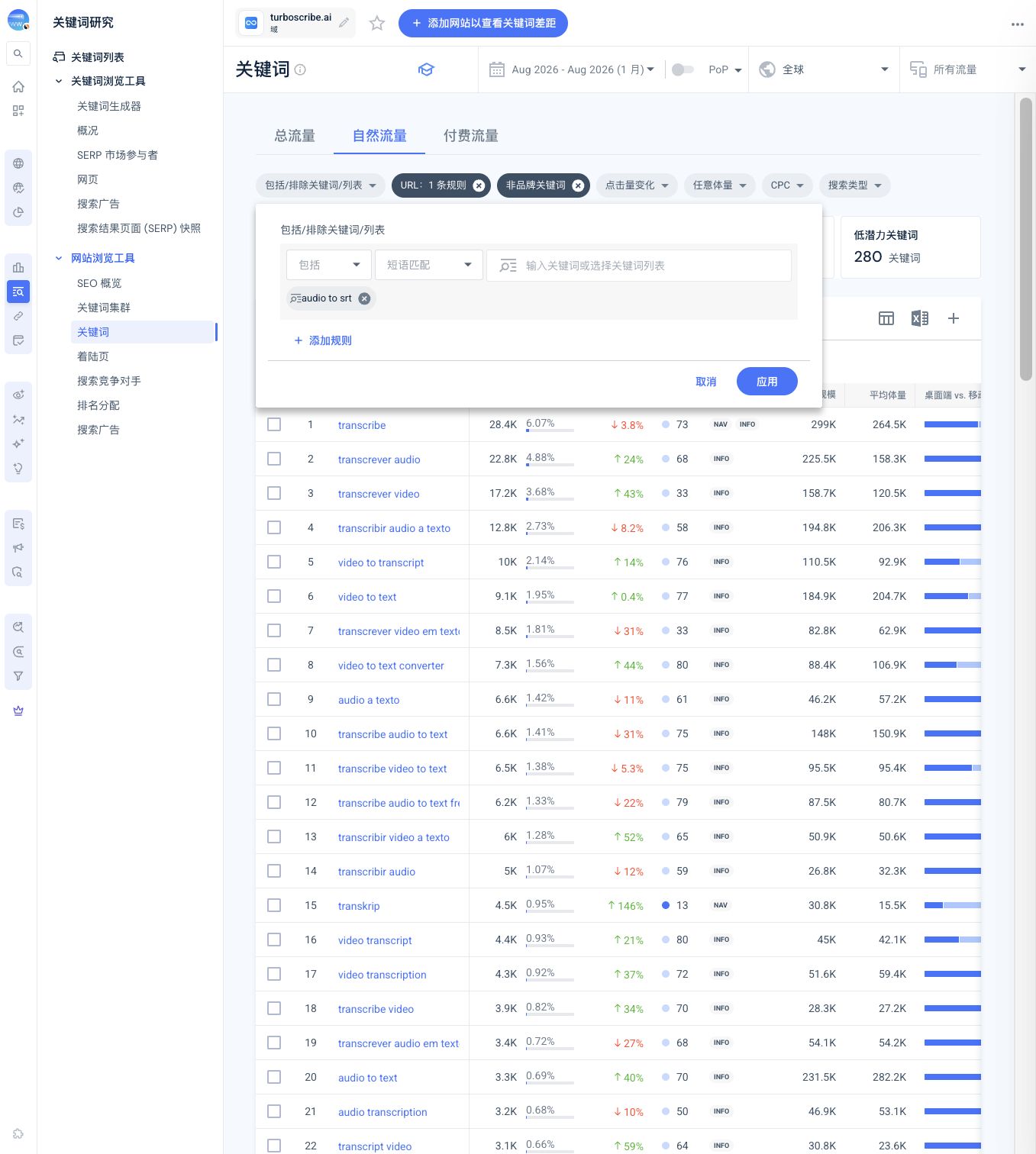
Apply the filter. The report shows ten matching terms; its first three rows, ordered by clicks, supply our candidates.
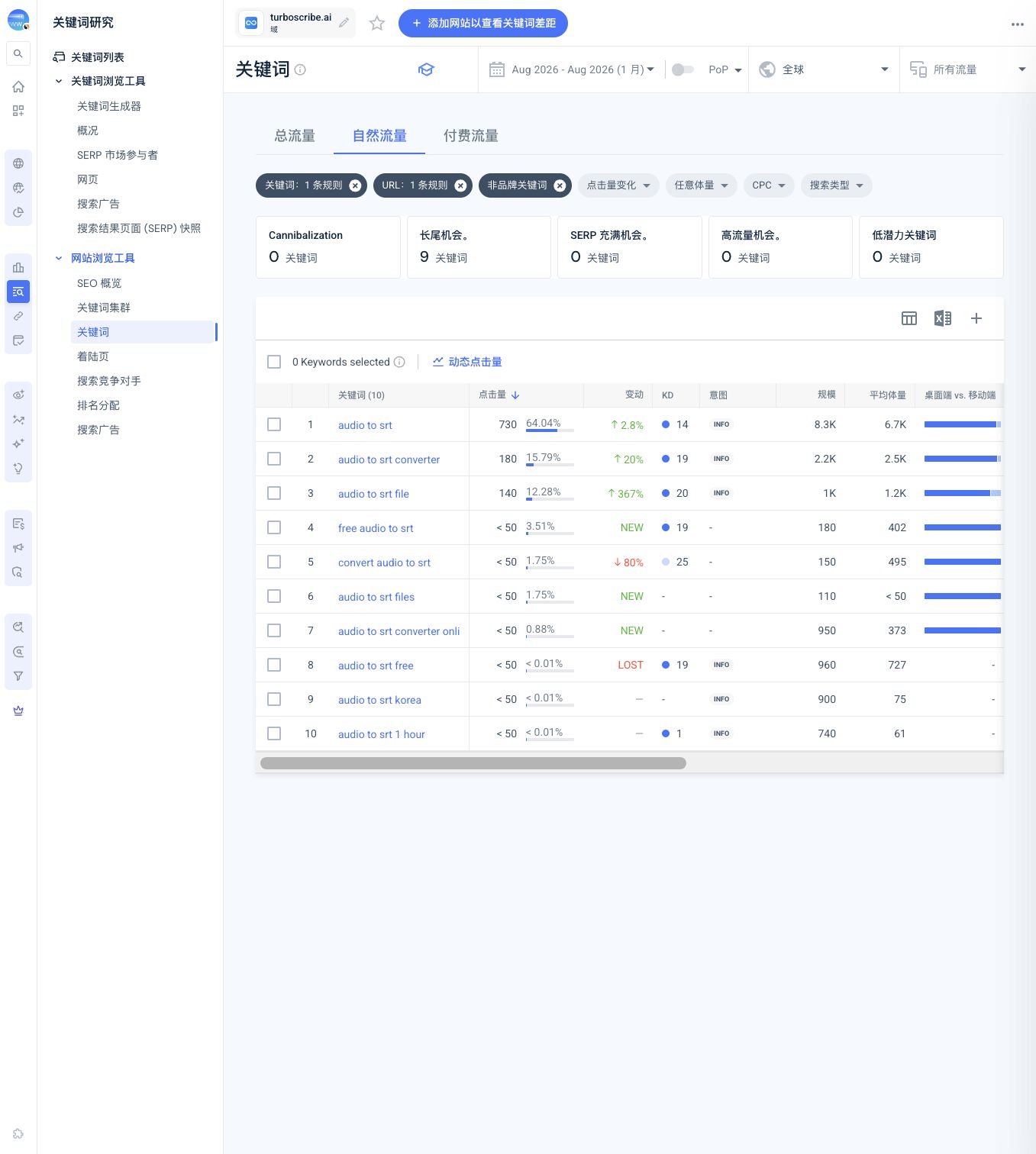
| Keyword | Market monthly searches | Organic clicks to TurboScribe | KD | Click change |
|---|---|---|---|---|
| audio to srt | 8.3K | 730 | 14 | +2.8% |
| audio to srt converter | 2.2K | 180 | 19 | +20% |
| audio to srt file | 1K | 140 | 20 | +367% |
These are observed keywords, not phrases invented from a product description. All three point to converting audio into subtitle files. The main term's 8.3K searches, 730 clicks, and KD of 14 make it worth investigating.
The screenshot's 64.04% is a share within the filtered results, not a share of the website's total traffic.
3. Open the page to understand the task
Visit TurboScribe's audio-to-SRT converter.
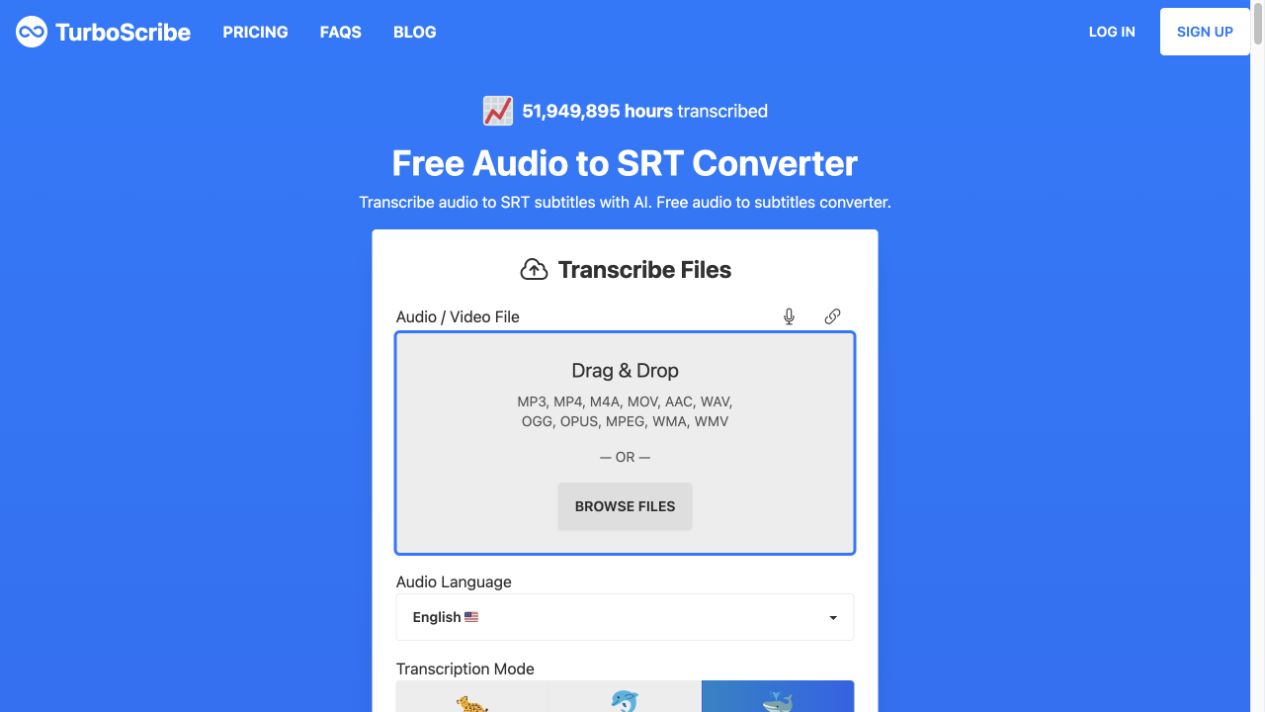
The tool accepts audio or video, lets the user choose a language, and produces timestamped SRT subtitles through AI transcription. This is a working conversion task, not simply a request to learn what SRT means.
The need is also independent of TurboScribe's brand. Another product could perform it—but that does not yet establish a reason for users to switch.
4. Separate an established need from a rising trend
Search for audio to srt in Google Trends, starting with the past five years.
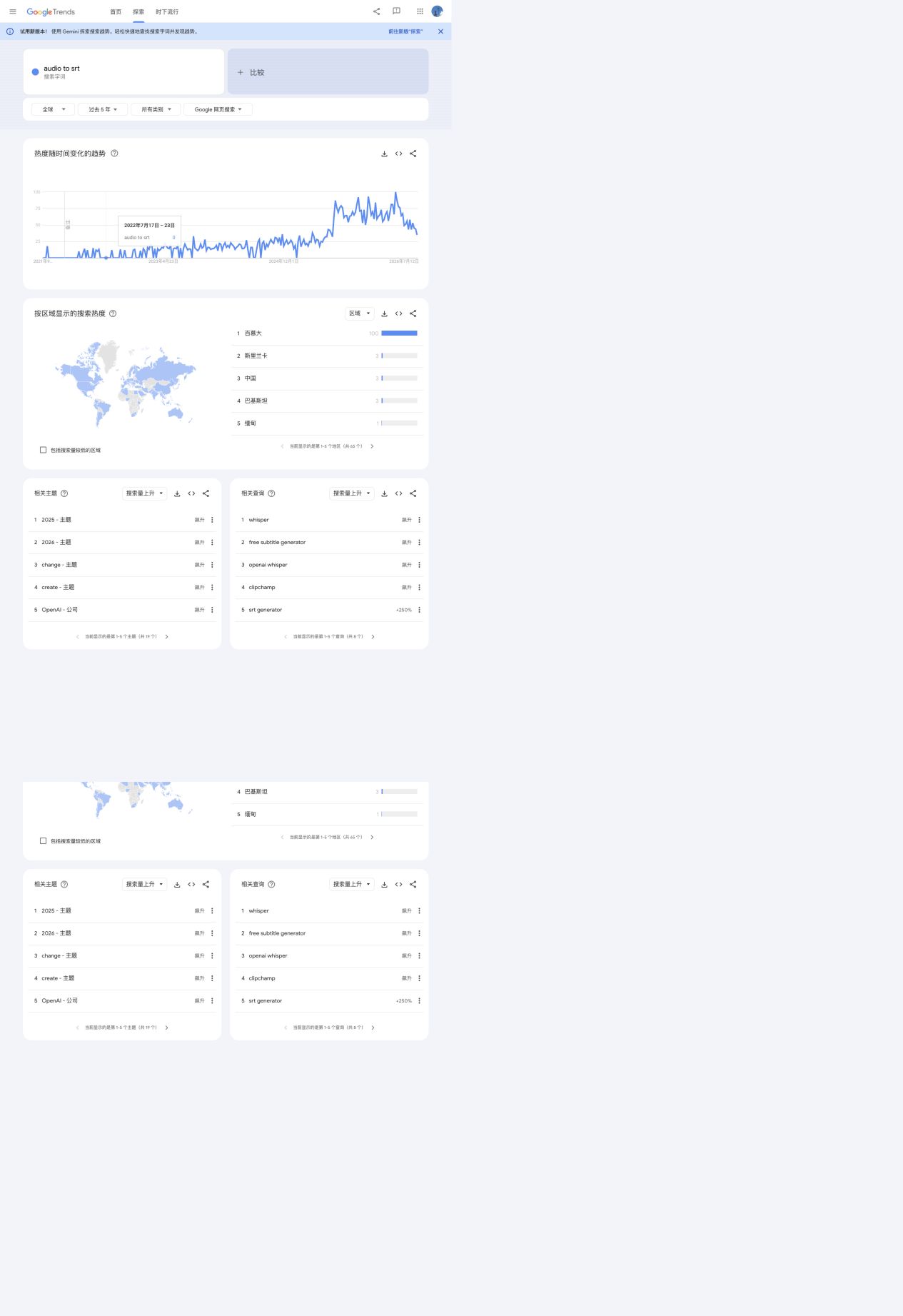
There are searches early in the chart, followed by stronger interest later. This is not a demand that appeared for the first time this month.
Switch to the past 90 days.
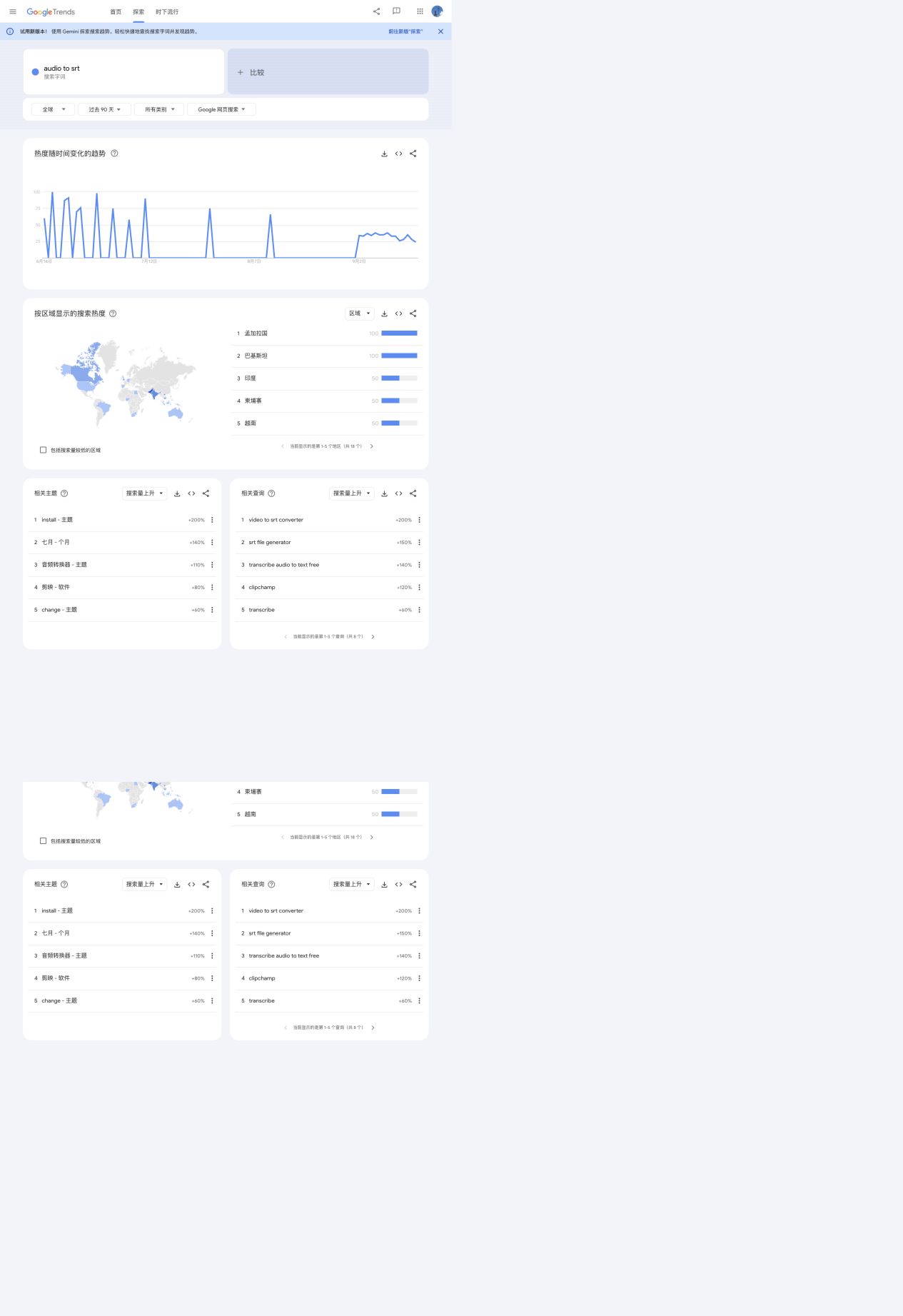
The recent series fluctuates and retreats from a peak. It does not establish uninterrupted growth. Trends measures relative interest, not the number of searches.
Related queries such as free subtitle generator and srt generator provide leads for another investigation. Check their own volume, clicks, and competition before treating them as opportunities.
5. Search normally to see the real competition
Run a normal Google search for audio to srt, without a title operator.
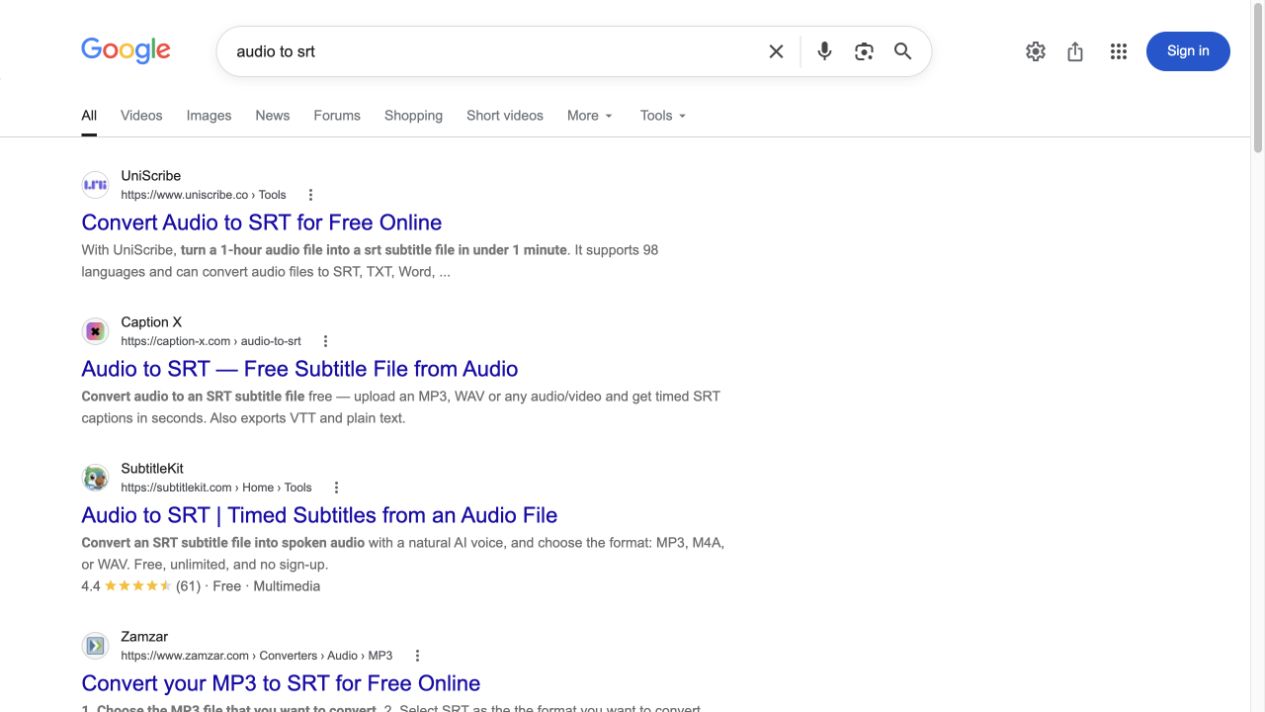
In the September 16, 2026 check, leading results included UniScribe, Caption X, SubtitleKit, Zamzar, Transcriptly, and TurboScribe. Conversion tools were prominent.
That tells us the intent is clear and already served. Competitor count alone is not enough to reject it; the next question is whether comparable tools receive meaningful clicks.
Specialist subtitle sites are useful product comparisons. Tool pages inside broader websites still matter: a specialist can rank an inner page too, so a subpage is not evidence of weak competition.
6. Check traffic to the competing tool, not just its domain
Caption X: evidence of page-level demand
In Similarweb, inspect caption-x.com, open Landing Pages → Organic Landing Pages, and filter for caption-x.com/audio-to-srt.
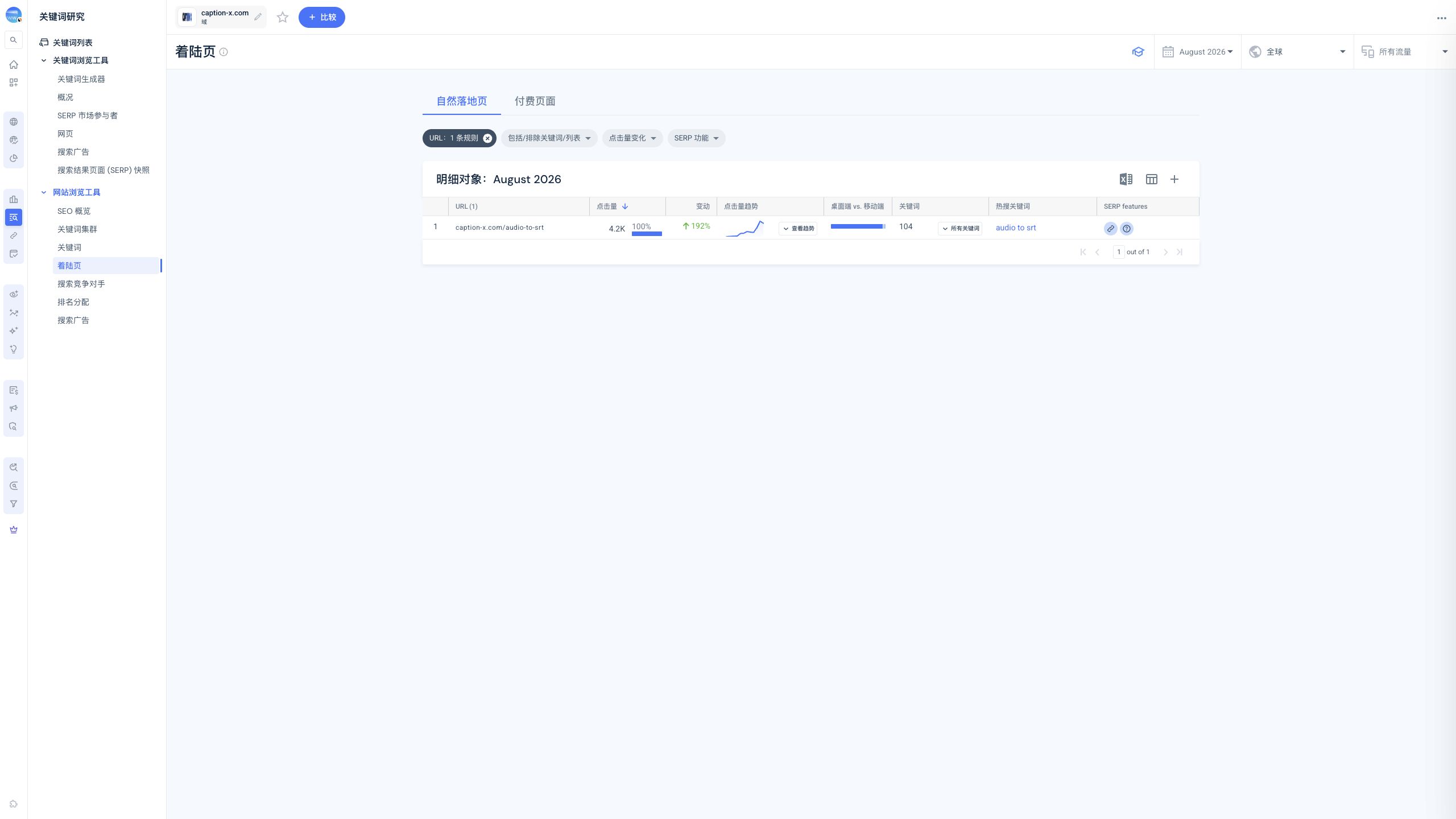
The August 2026 report estimates 4.2K organic clicks and 104 associated keywords for that page. This is the page's traffic across all keywords—not 4.2K clicks from the exact term audio to srt.
It demonstrates that a comparable tool page can attract search traffic. Its associated keywords are also a place to find variants and longer queries.
AudioSRT: a specialist whose traffic is mostly branded
Now inspect the organic keyword report for audiosrt.com.
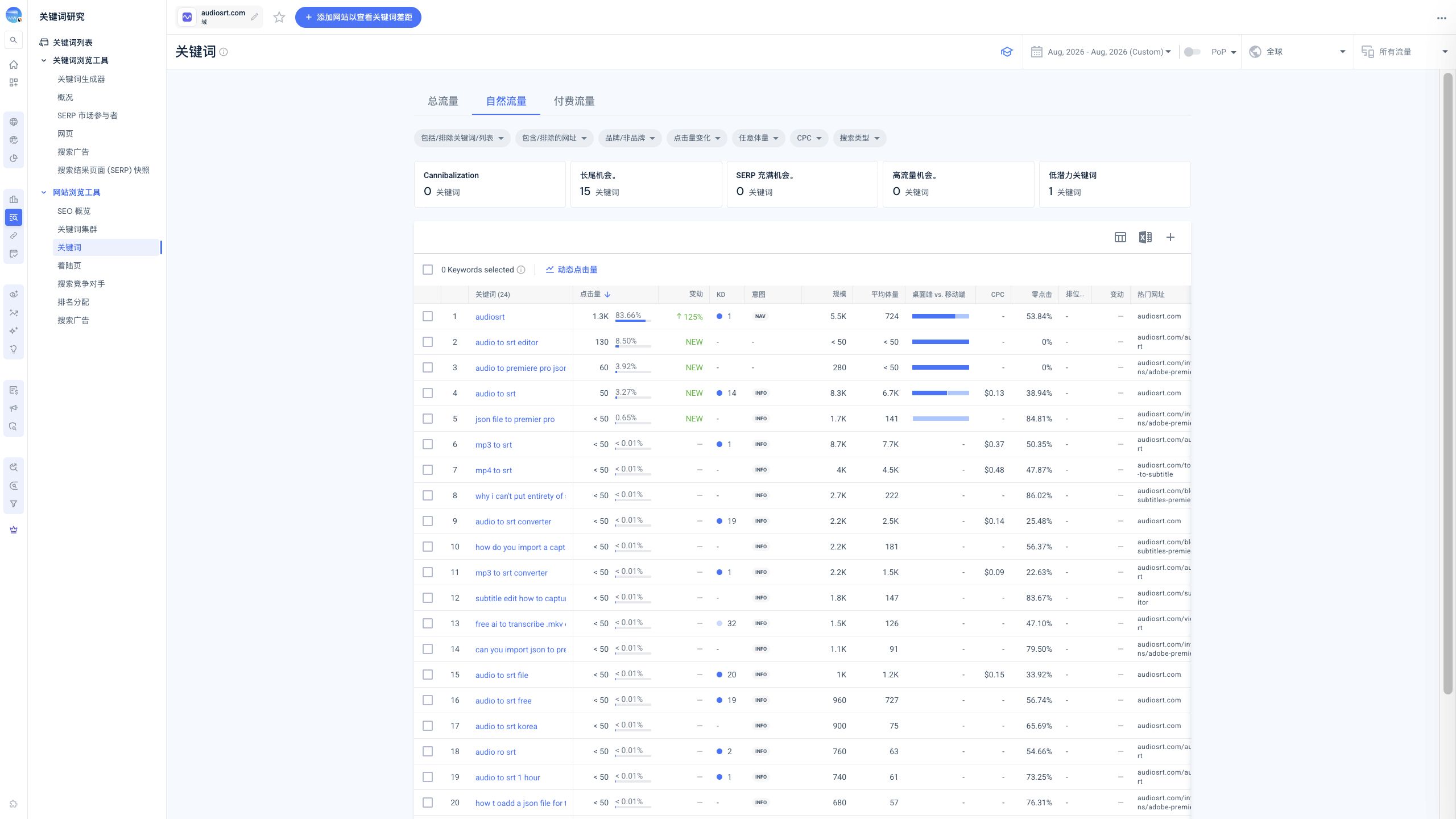
| Keyword | Monthly organic clicks | Share |
|---|---|---|
| audiosrt | 1.3K | 83.66% |
| audio to srt editor | 130 | 8.50% |
| audio to premiere pro json cc create | 60 | 3.92% |
| audio to srt | 50 | 3.27% |
About 84% comes from its brand. The exact main term contributes only about 50 clicks. We cannot treat the whole site's traffic as traffic a new competitor could capture from this generic need.
Together, these reports show both sides: one tool page gets substantial clicks, but specialist positioning does not guarantee the same outcome. All figures are third-party monthly estimates.
7. Calculate KGR without mixing up the inputs
KGR divides title-matching result count by monthly search volume. To see Google's count, open Tools after searching and read About N results at the bottom of the menu.
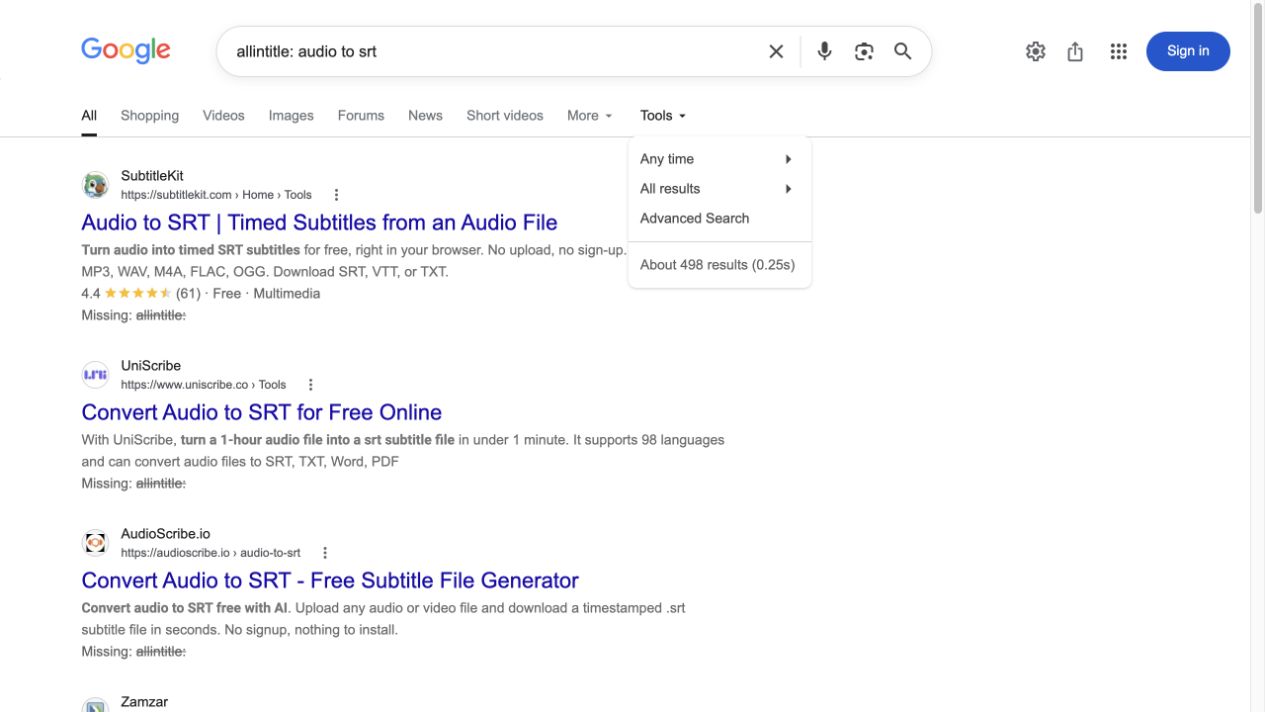
Here, allintitle: audio to srt returned about 498 results, but the results also showed Missing: allintitle:. That makes the count unsuitable for a clean allintitle calculation.
A separate intitle:"audio to srt" search showed about 403 results.
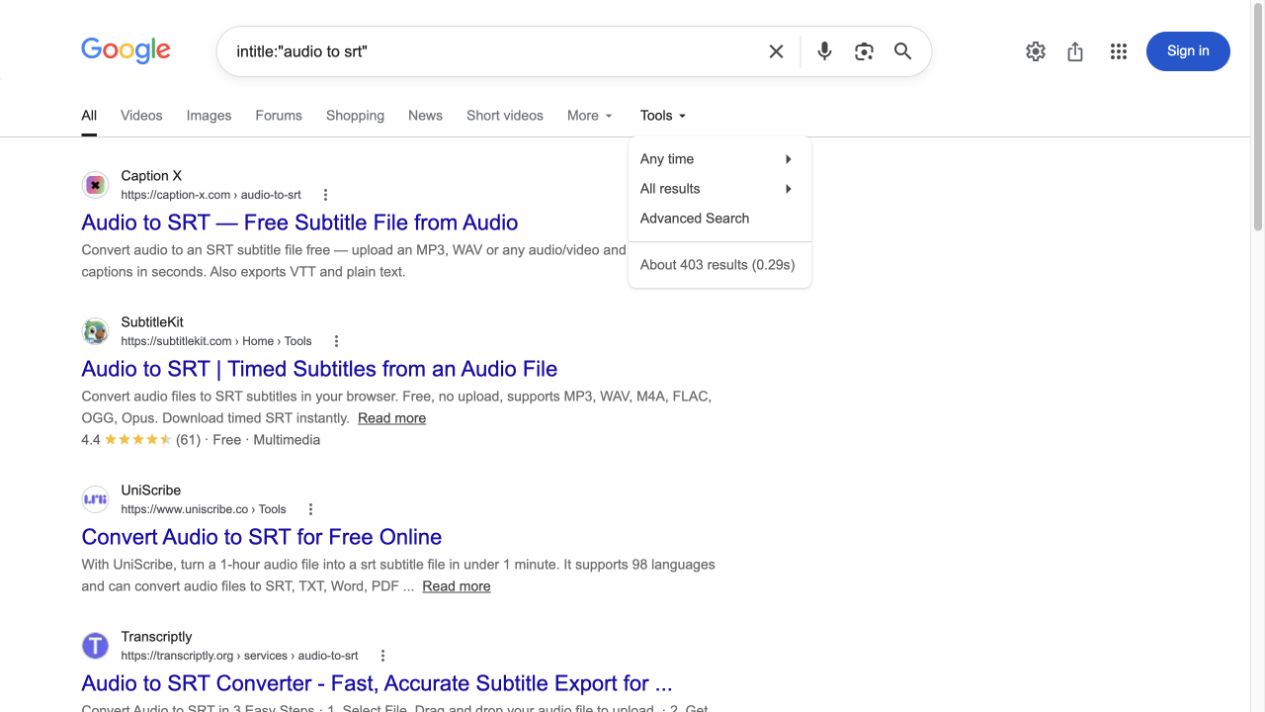
Using the earlier 8,300 searches demonstrates the arithmetic:
Title-match ratio = matching results / monthly searches
                  = 403 / 8300
                  ≈ 0.049
This is below the commonly cited 0.25 reference line, but it is not a valid like-for-like KGR verdict. The denominator is global August volume, while the Google query uses US parameters. It also uses an exact-phrase intitle query rather than traditional allintitle. Align the market, volume period, and query method before drawing a conclusion.
Even a consistently measured low ratio cannot promise a top-three ranking.
8. Is this worth building?
Keep it under consideration; do not launch a standalone site on this evidence alone.
The positive signals are real: an identifiable task, relatively low reported KD, main-keyword clicks to TurboScribe, and roughly 4.2K monthly organic clicks to Caption X's relevant page.
The case is incomplete because established tools already serve the query, AudioSRT captures few clicks from the main term, and the recent trend is not steadily rising. None of this proves a similar new converter will attract enough visitors or paying users.
A better subtitle-editing experience, more accurate output, or a poorly served user workflow could justify a product. If the only plan is to reproduce the same conversion function, investigate another candidate first.
Latest from the blog
New research, comparisons, and workflow tips from the Vibe Coding Tools team.
Install Taste Skill for Claude Code, Codex, or Cursor. Explore real website examples, copy practical prompts, and read community feedback.
A practical way to turn rising Vercel subdomains into testable demand leads using landing-page trends, keyword mix, backlinks, and Google Trends.
A practical Windows setup for serving Qwen3.8-27B from LM Studio and using it in DeepSeek Harness, with separate 16GB and 24GB VRAM profiles.