
Jev Model Research: Where Typed Decisions Fit in AI Workflows
Jev Model Research: Where Typed Decisions Fit in AI Workflows
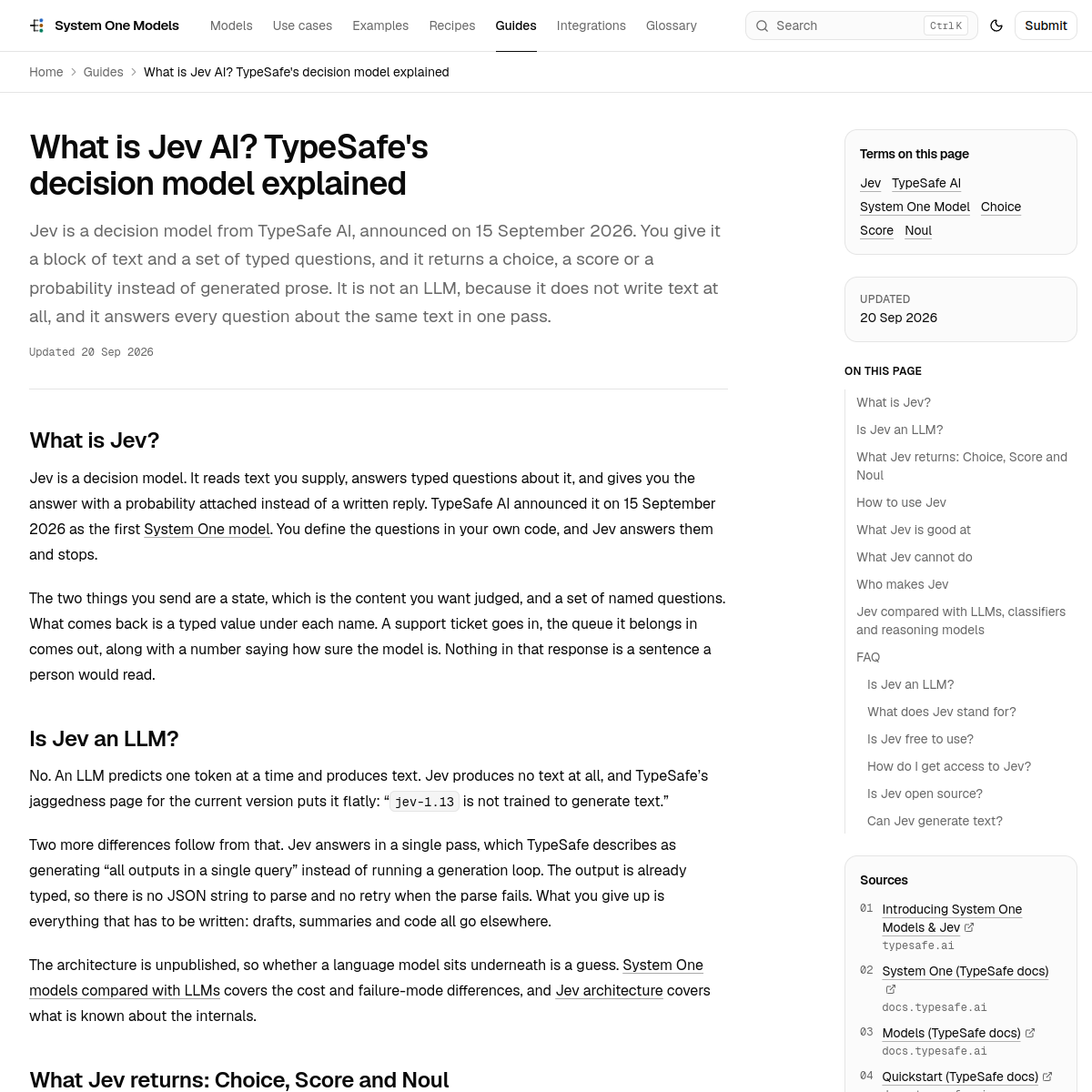
Jev is easier to understand as a decision layer beside a language model than as a smaller chatbot. An application sends shared state and a set of typed questions; Jev returns choices, scores, or boolean answers with probabilities. The application then maps those answers to a branch such as “retry,” “ask the user,” or “escalate.”
That boundary makes Jev interesting for routing and workflow control. It also sets a hard limit: the model is only as useful as the questions and candidate options the developer supplies.
Research date: September 21, 2026. Product availability, price, and SDK behavior can change; the current page should be checked before implementation.
The useful mental model: evaluate state, then branch
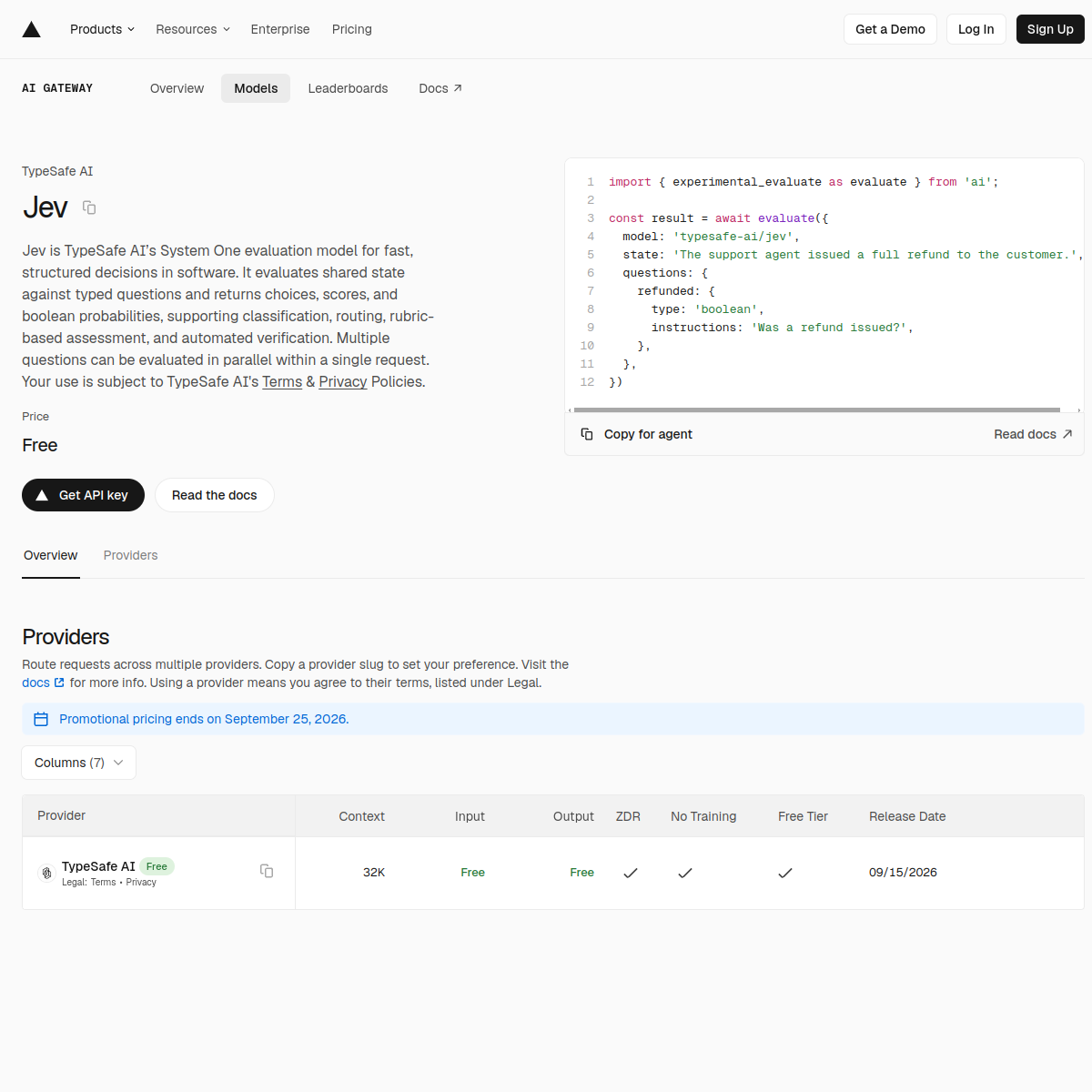
General purpose LLMs are good at producing text, code, explanations, and open ended answers. Jev evaluates a bounded decision. The official Vercel model page describes choices, scores, and boolean probabilities, with multiple questions evaluated in parallel in one request.
The distinction matters in production code:
| Question | Jev | General purpose LLM |
|---|---|---|
| Output contract | Candidate decisions, scores, booleans, probabilities | Generated text or structured text that still needs validation |
| Best fit | Routing, classification, rubrics, verification | Writing, coding, explanation, open ended reasoning |
| Control surface | Developer supplied questions and options | Prompt plus model behavior |
| Failure mode | A bad option set can exclude the correct answer | A plausible answer can violate the requested format |
The model does not create a conversation memory for the application. Each call receives its own state and questions. If the next decision needs earlier actions, results, or goals, the application has to summarize those values and include them in the next state. The TypeSafe state documentation and API documentation are the right places to confirm the current payload shape.
Where a decision layer can earn its place
The strongest use cases have a small action space and a clear fallback:
- select the next tool or specialist agent;
- decide whether a workflow should continue, retry, ask for clarification, or stop;
- score urgency or risk before a human or automated action;
- verify another model's output and send low confidence cases to review;
- classify tickets or rank candidates using a fixed rubric.
These are workflow decisions, not promises that Jev understands every open ended request. A high probability is still a model judgment, not a correctness guarantee. If the right answer is missing from the candidate list, Jev must choose among the wrong options.
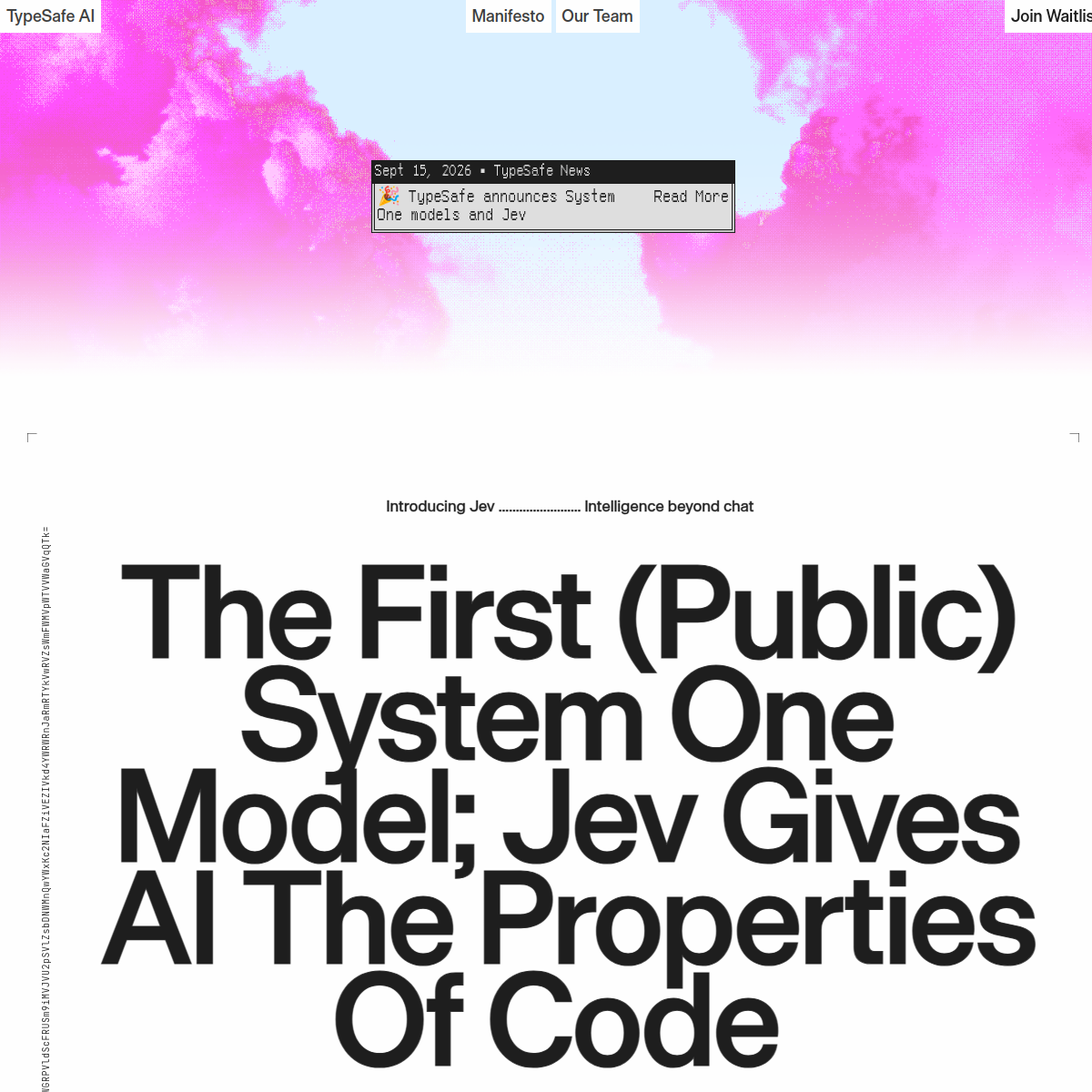
Vercel reported that nearly 13% of paid AI Gateway teams had used Jev within 24 hours of launch, making it the fastest adopted model launch in that product's history. That is an anonymized Vercel platform observation, not evidence of adoption across the whole developer market. TypeSafe's speed and cost comparisons are also vendor evaluations; reproduce them with your own state sizes, concurrency, and error policy before making a cost claim.
Availability and pricing on the research date
The Vercel Jev page currently labels the model Free, shows an API key entry point, and says it is checking availability for the team. It also lists promotional pricing ending September 25, 2026. “Free” on the model page should therefore be read together with the provider, team availability, quota, and terms shown in the console.
Jev is a hosted service. TypeSafe has not published Jev weights for offline inference, so a local deployment should be treated as a separate research project rather than a download step. The official TypeSafe JavaScript SDK README currently documents @typesafe-ai/sdk, TypeSafeClient, and systemOne; the Vercel page documents an AI SDK experimental_evaluate integration. Both are moving surfaces, so pin versions and test the actual response shape.
A small JavaScript integration
The Vercel example shows the intended shape: state plus typed questions, followed by an application branch.
import { experimental_evaluate as evaluate } from "ai";

const result = await evaluate({
  model: "typesafe-ai/jev",
  state: "The support agent issued a full refund to the customer.",
  questions: {
    refunded: {
      type: "boolean",
      instructions: "Was a refund issued?",
    },
  },
});

console.log(result);
Treat the snippet as an integration shape, not a frozen contract. Confirm the current AI SDK version, authentication, response fields, provider availability, and pricing in the Vercel documentation before copying it into production.
What the open source projects are—and are not
There is no TypeSafe published Jev checkpoint for local use in the sources reviewed here. Independent projects implement a similar “state plus typed questions plus probabilities” interface or research direction:
| Project | What it offers | Boundary to keep clear |
|---|---|---|
| OpenJev | Local research preview backed by Qwen3-4B-Instruct-2507 | Explicitly independent from TypeSafe; no claim of Jev parity |
| Mapika/decider | A System One style reproduction based on Qwen3.5-2B | Training data and comparative quality need independent evaluation |
| von | A local non autoregressive decision model project | Repository performance claims are not Jev benchmark results |
Use OpenJev when the immediate goal is to try the interface locally. Study the other projects when the goal is model structure, calibration, or inference engineering. Calling any of them “the open source Jev” would overstate what their repositories establish.
A sensible evaluation plan
Before replacing an LLM call, create a small held out set of real states and define the candidate options in advance. Measure accuracy, calibration, abstention or escalation behavior, latency, token cost, and the cost of an incorrect branch. Include cases where the correct answer is not among the options; that reveals whether the application needs an explicit “unknown” choice.
Jev is compelling when a workflow already has a bounded decision and the next action matters more than a generated explanation. It is the wrong tool for a task whose value comes from writing the answer itself.
References
Latest from the blog
New research, comparisons, and workflow tips from the Vibe Coding Tools team.
Learn how Pollo, Invideo and Artlist connect brand searches to useful tasks, with keyword evidence, landing-page comparisons and clear limits on SEO conclusions.
Use Similarweb, Google Trends, competitor traffic, and a KGR example to assess an audio-to-SRT tool opportunity.
Install Taste Skill for Claude Code, Codex, or Cursor. Explore real website examples, copy practical prompts, and read community feedback.